

Depression is a debilitating condition that affects millions of people worldwide. Despite the wide array of treatments available, such as medication, psychotherapy, and electroconvulsive therapy, a significant portion of patients remain resistant to treatment. In recent years, there has been growing interest in the use of psychedelics as a potential alternative treatment for depression. One such psychedelic is psilocybin, which is found in certain species of mushrooms. This article will examine a recent study on the use of psilocybin with psychological support for treatment-resistant depression.
History of psilocybin
Psilocybin has a long history of use in traditional healing practices, as well as in recreational settings. However, in the mid-20th century, it was classified as a Schedule I substance in the United States, meaning that it was deemed to have no medical use and a high potential for abuse. In recent years, however, there has been a resurgence of interest in the therapeutic potential of psilocybin and other psychedelics.
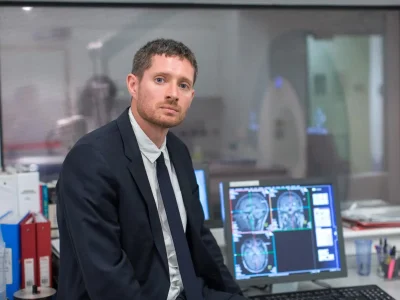
Robin L. Carhart-Harris at Imperial College London
The Study
The study in question was conducted by a team of researchers led by Robin L. Carhart-Harris at Imperial College London. The study aimed to investigate the safety and efficacy of psilocybin with psychological support for patients with treatment-resistant depression. The study was a randomized, double-blind, placebo-controlled trial, meaning that neither the patients nor the researchers knew who was receiving psilocybin and who was receiving a placebo until after the study was completed.
Participants
The study enrolled 20 patients with treatment-resistant depression. All participants had a history of depression lasting at least two years and had failed to respond to at least two previous treatments, including medication and psychotherapy. Participants were excluded if they had a history of psychosis, bipolar disorder, or other serious mental illness.
Intervention
Participants were randomly assigned to receive either a single dose of psilocybin or a placebo. The dose of psilocybin was 10 mg, with an option to increase to 25 mg in subsequent sessions if needed. Psychological support was provided before, during, and after the administration of psilocybin or placebo. The psychological support consisted of two preparatory sessions, a psilocybin administration session, and several follow-up sessions.
Results
The results of the study showed that psilocybin with psychological support was safe and effective for the treatment of treatment-resistant depression. All participants showed some reduction in depression severity at one week post-treatment, and these reductions were sustained in the majority of participants for up to six months. QIDS-SR16 scores were significantly reduced at all six post-treatment time points, with the maximum effect size at five weeks. BDI and STAI-T anxiety scores were also significantly reduced at one week, three months, and six months post-treatment. SHAPS anhedonia scores were significantly reduced at one week and three months post-treatment. HAM-D scores were significantly reduced at one week post-treatment, and GAF scores were significantly increased at one week post-treatment.
Adverse Effects
The study found that psilocybin with psychological support was generally well-tolerated by participants, with no serious adverse events reported. The most common side effects were transient anxiety and headaches, which were reported by 15 and eight participants, respectively. Five participants reported transient nausea, and three participants reported transient paranoia within the duration of the acute drug experience. There were no reported cases of so-called flashbacks or persisting perceptual changes.
Limitations
It is important to note that this study had several limitations. First, the sample size was small, with only 20 participants enrolled in the study. Second, the study did not include a long-term follow-up period beyond six months, so it is unclear
Long-Term Effects of Psilocybin
The researchers continued to follow up with the patients for six months after their treatment. They found that the improvements in depression, anxiety, and anhedonia persisted over this period, with some measures showing even further improvement. The patients’ scores on the Beck Depression Inventory and State-Trait Anxiety Inventory decreased significantly at the 3 and 6-month follow-ups. The researchers also observed that the patients had a greater ability to experience pleasure and had an improved ability to function in their daily lives, as measured by the Global Assessment of Functioning Scale.
Safety and Tolerability of Psilocybin Treatment
One of the main concerns with using psychedelic substances in a clinical setting is the potential for adverse reactions. However, the researchers found that the psilocybin treatment was generally well-tolerated and safe. The most common side effects reported were transient anxiety and headaches, which were mild and short-lived. Five patients reported transient nausea, and three patients reported transient paranoia during the acute drug experience. However, these effects were short-lived and resolved quickly.
One patient became uncommunicative during the peak of their psilocybin experience, but this normalized after the acute drug effects had subsided. Despite this experience, the patient reported that the treatment had been beneficial and had a positive impact on their depression symptoms. This patient did not complete further follow-up measures, except for the QIDS-SR16 and BDI scores at 6 months post-treatment, which indicated that their depression had returned.
Implications and Future Directions
The findings of this study suggest that psilocybin, when used in conjunction with psychological support, may be an effective treatment option for individuals with treatment-resistant depression. The results of this study are encouraging, as depression is a pervasive and debilitating condition that affects millions of people worldwide.
However, it is important to note that this study has some limitations. The sample size was relatively small, and the study lacked a control group. Additionally, the researchers did not control for other clinical measures beyond the QIDS-SR16, as they were concerned about introducing type 2 errors through overly conservative correction. Future studies with larger sample sizes and control groups are needed to further investigate the potential benefits and risks of psilocybin treatment for depression.
Conclusion
In conclusion, the results of this study suggest that psilocybin, when used in conjunction with psychological support, may be an effective treatment option for individuals with treatment-resistant depression. The study found that the improvements in depression, anxiety, and anhedonia persisted for six months after treatment, with some measures showing even further improvement. The treatment was generally well-tolerated and safe, with only mild and short-lived side effects reported.
While the findings of this study are encouraging, more research is needed to fully understand the potential benefits and risks of psilocybin treatment for depression. Additionally, it is important to note that psilocybin should only be used in a clinical setting under the guidance of trained professionals.
Disclaimer: This article is for informational purposes only and is not intended to provide medical advice or endorse the use of psilocybin for any purpose. Individuals should always consult with their healthcare provider before making any decisions about their mental health treatment.
Reference(s):
Psilocybin with psychological support for treatment-resistant depression: six-month follow-up
Psychopharmacology (2018) 235:399–408
https://link.springer.com/article/10.1007/s00213-017-4771-x
Related Posts

Which Countries and US States Are Psilocybin Magic Mushrooms Legal?
- Posted by
 Happy Hongo
What is Psilocybin and Psilocin?
- Posted by Happy Hongo
What is the difference between psilocybin and psilocin? Which one causes psychedelic effects? What are the effects of each compound? Learn more…
20 Great Tips for Improving Memory
- Posted by Happy Hongo
The History of Psilocybin ‘Magic’ Mushrooms
- Posted by Happy Hongo